Heritage queried
The controversy surrounding the Delhi Gymkhana Club is no longer only about one institution in Lutyens’ Delhi.
The battle over Delhi Gymkhana Club is not really about a club. It is about what kind of capital city India wants to inhabit ~ one rooted in institutional memory or one constantly remade in the image of political power and security priorities.




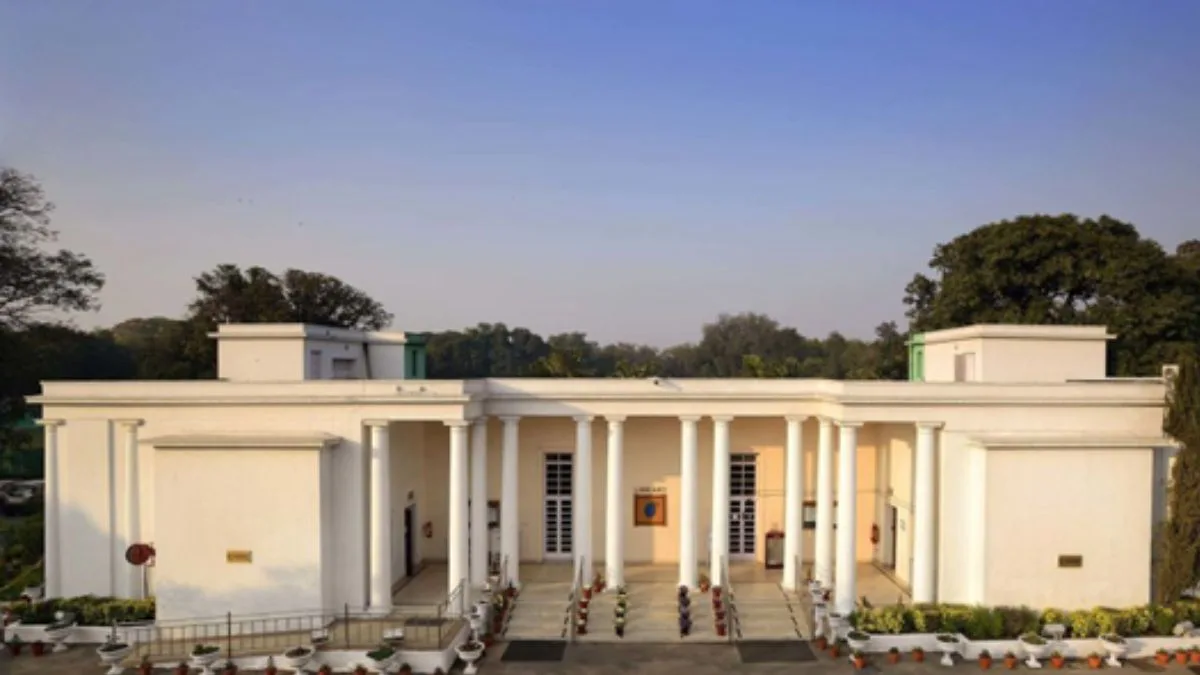
Delhi Gymkhana Club
The battle over Delhi Gymkhana Club is not really about a club. It is about what kind of capital city India wants to inhabit ~ one rooted in institutional memory or one constantly remade in the image of political power and security priorities. For decades, the Gymkhana represented everything critics disliked about Delhi. It embodied exclusivity, inherited privilege and a closed ecosystem where senior bureaucrats, military officers and influential families occupied a social world largely inaccessible to ordinary citizens.
Long waiting lists and opaque membership rules turned the club into a metaphor for a republic where access often depended less on merit than on networks. Seen from that perspective, the government’s move seeking to reclaim the land on which the institution is built fits neatly into the political grammar of the era. Since 2014, the BJP has built much of its ideological appeal around dismantling the authority of what it portrays as the entrenched “Lutyens” establishment ~ the English-speaking, institutionally connected elite that has historically dominated Delhi’s political culture. The scrutiny of old clubs, think tanks, NGOs and semi-autonomous institutions has reflected a larger attempt to reorder who controls influence in the capital. Yet there is another side to this story, one that should concern even those who have little sympathy for elite clubs. Cities are not sustained by infrastructure alone.
Advertisement
They are held together by continuity, memory and layered civic spaces that survive political cycles. Delhi has already lost much of that continuity. Old cinemas disappeared. Coffee houses faded. Bookstores vanished. Public avenues became increasingly securitised. Entire neighbourhood cultures were erased by redevelopment and bureaucratic redesign. Every generation of Delhiites carries a mental map of places that no longer exist. The Gymkhana survived because it occupied a peculiar historical position. Born in the colonial era, it also witnessed the transfer of power, Partition, the rise of the Indian bureaucracy and the evolution of the post-independence state.
Advertisement
Institutions like these are often flawed archives of history. Their value lies not in moral perfection but in their ability to preserve the texture of earlier eras. That is why the current confrontation raises a question. Should democratic societies reform exclusionary institutions or simply erase them? There is a meaningful distinction between opening spaces up and eliminating them altogether. A confident republic should be capable of democratising heritage without destroying it. Converting historically elite institutions into more inclusive civic spaces would strengthen public ownership of history rather than reduce urban memory to another casualty of state expansion. The larger risk for Delhi is not the disappearance of one club. It is the gradual transformation of the capital into a city where everything old is viewed either as politically suspect or commercially expendable. Once that process gathers momentum, cities become efficient but emotionally hollow ~ stripped of the imperfect spaces that once gave them character. Power can always build newer structures. What it cannot easily recreate is a historical atmosphere once it has been erased.
Advertisement